
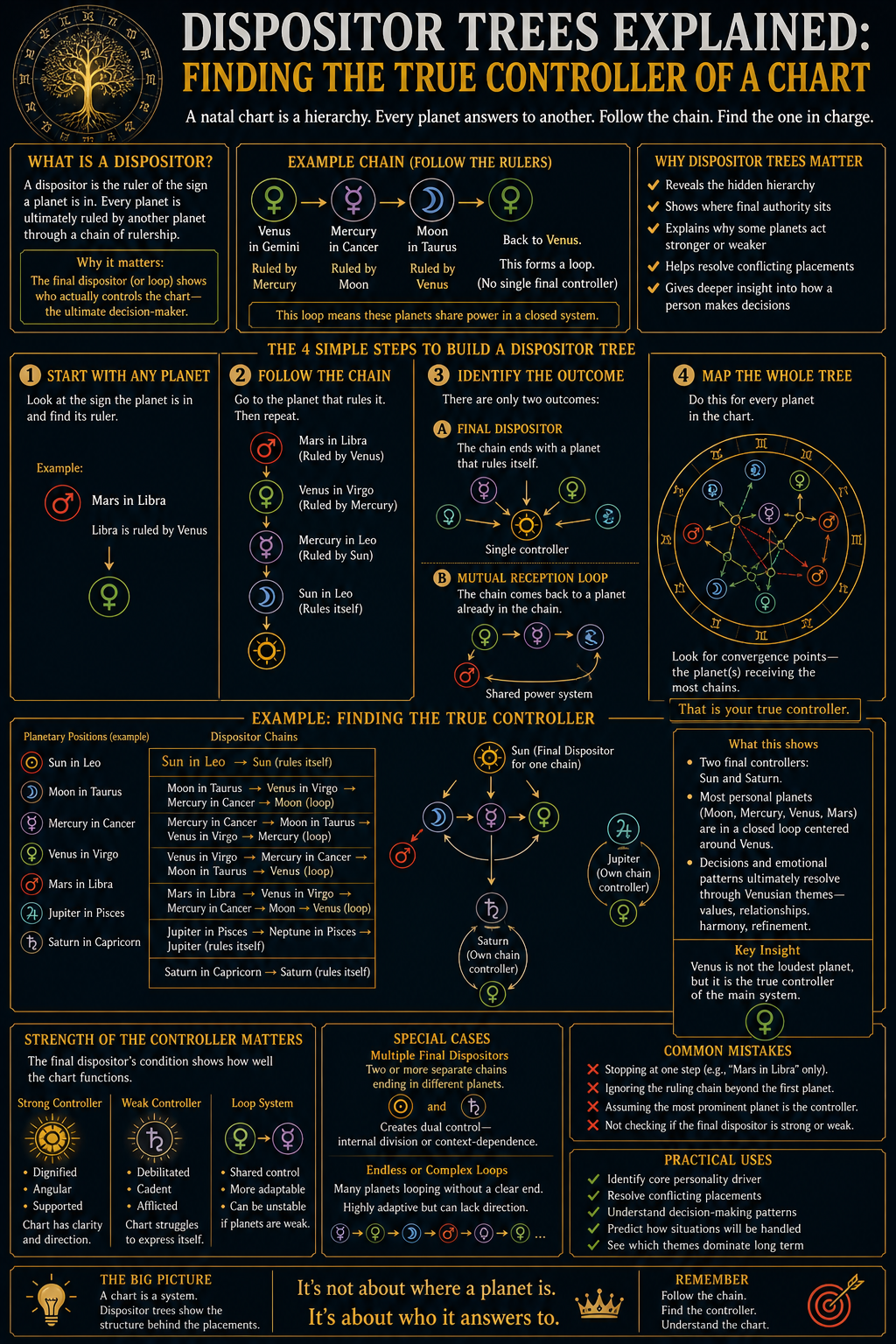
Dispositor Trees Explained: Finding the True Controller of a Chart
The Hidden Hierarchy Most People Miss A natal chart isn’t a flat list of placements. It’s a chain of command. Every planet answers to another […]
The Hidden Hierarchy Most People Miss A natal chart isn’t a flat list of placements. It’s a chain of command. Every planet answers to another […]
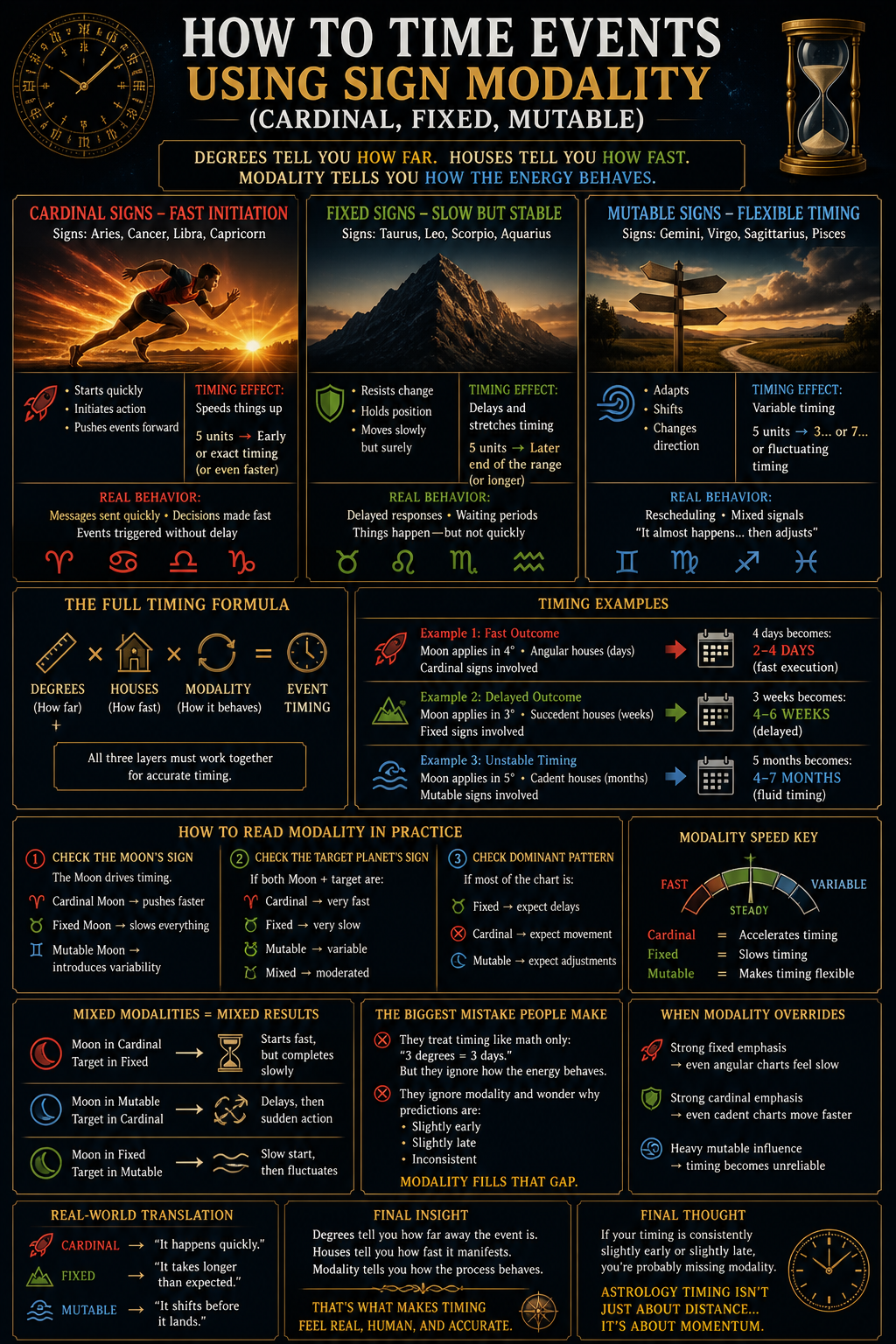
Why Modality Is the Missing Timing Layer Most astrologers stop at: But there’s a third layer that quietly refines everything: Sign modality = behavioral speed […]
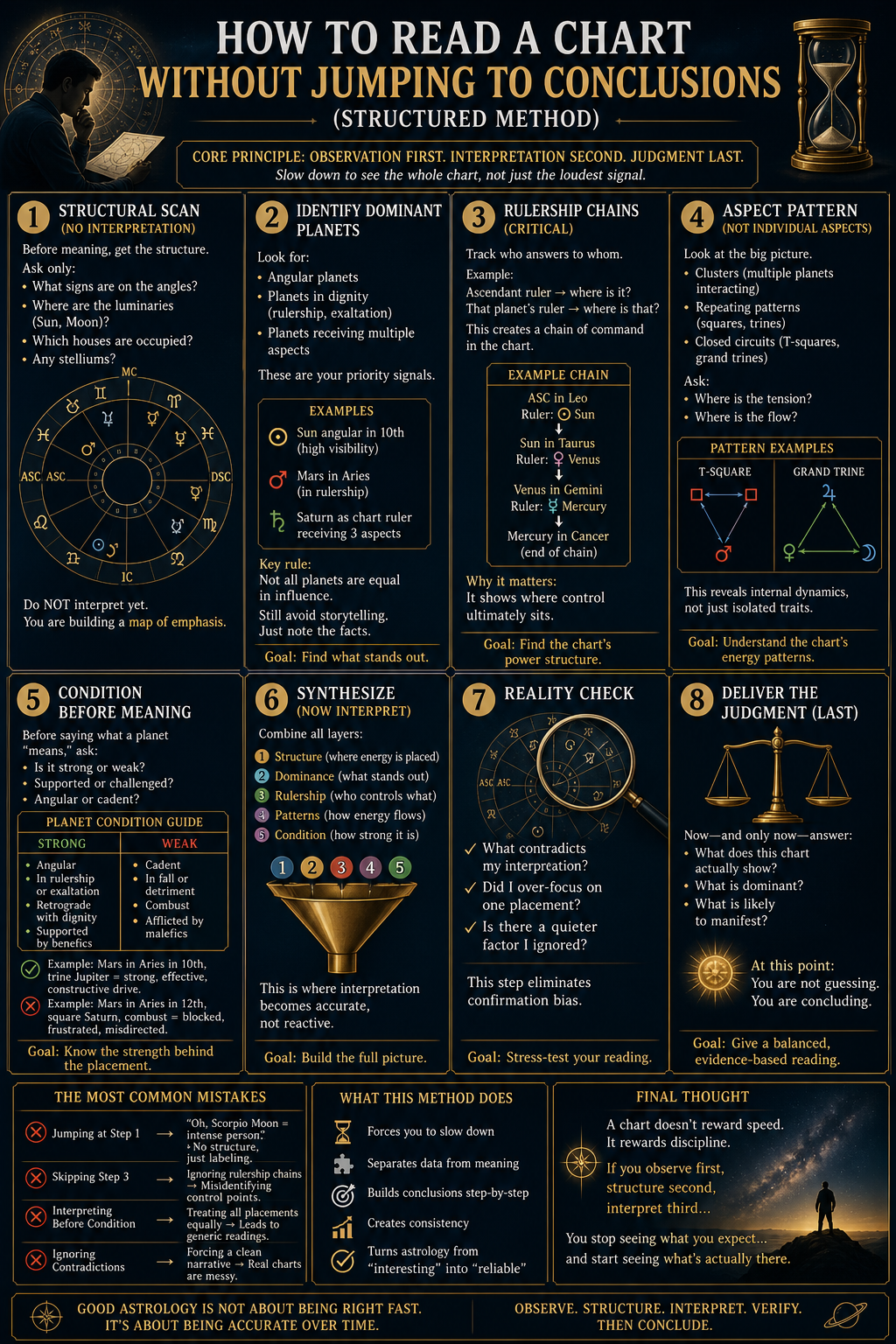
The Real Problem: Speed Feels Like Skill Most misread charts don’t come from lack of knowledge. They come from reading too fast. It feels efficient. […]
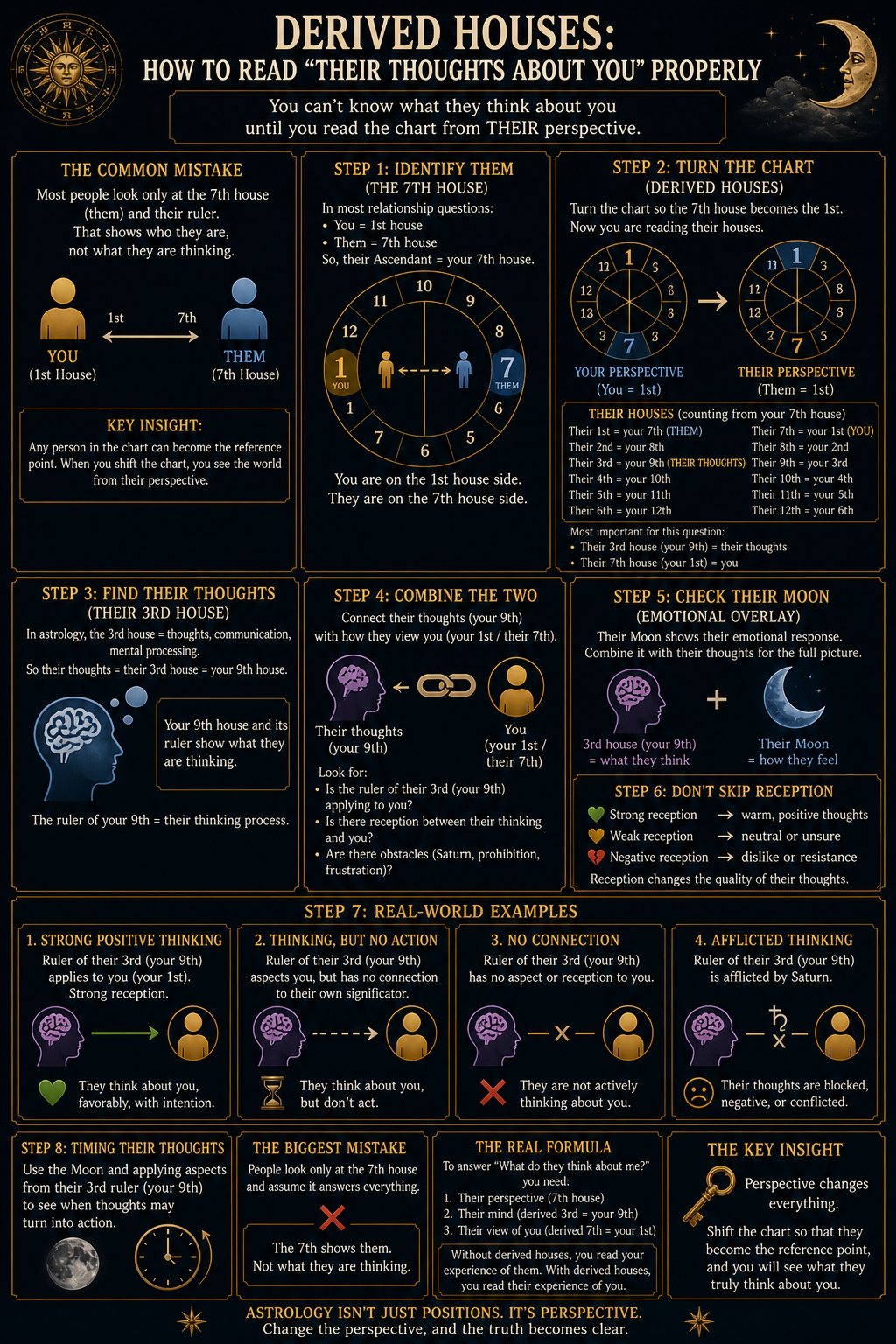
The Common Mistake Most people try to answer: “What do they think about me?” By looking at: That’s incomplete. Because you’re still reading the chart […]
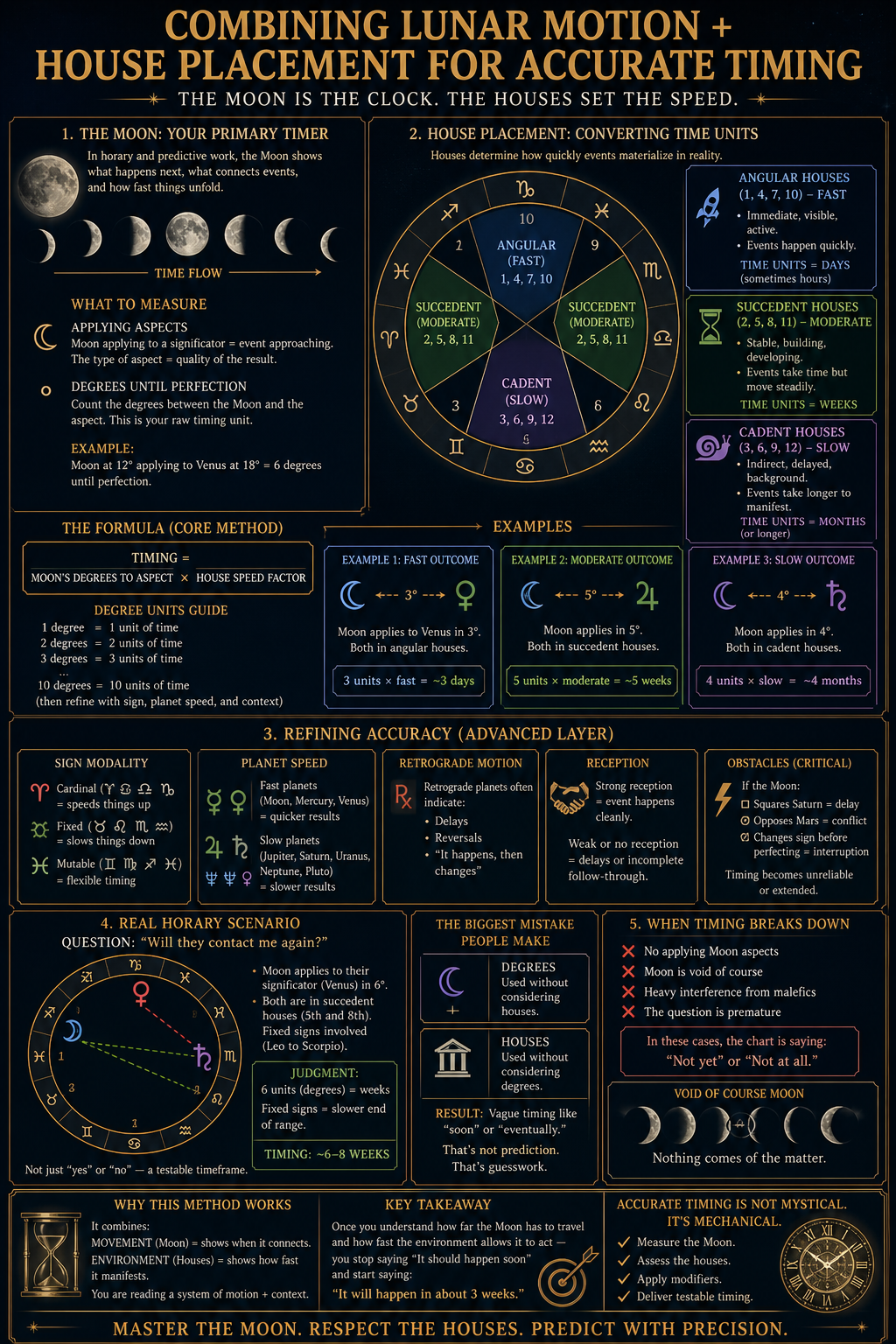
Why Timing Is Where Most Readings Fail Most astrologers can tell what might happen. Far fewer can tell when. The gap isn’t intuition—it’s method. Accurate […]
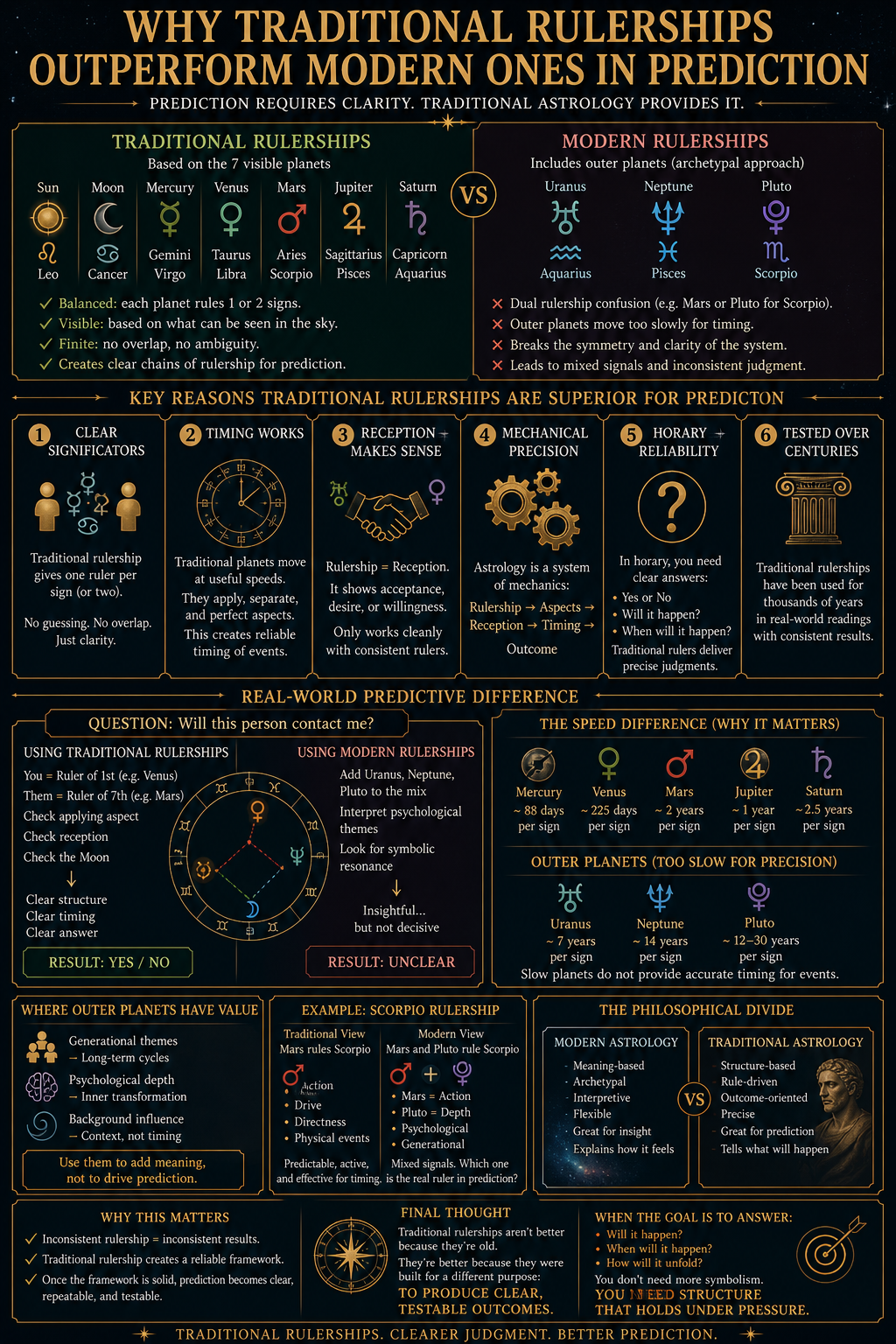
The Core Difference At some point, every serious astrologer runs into this question: Should I use traditional rulers… or modern ones? Both can describe personality. […]
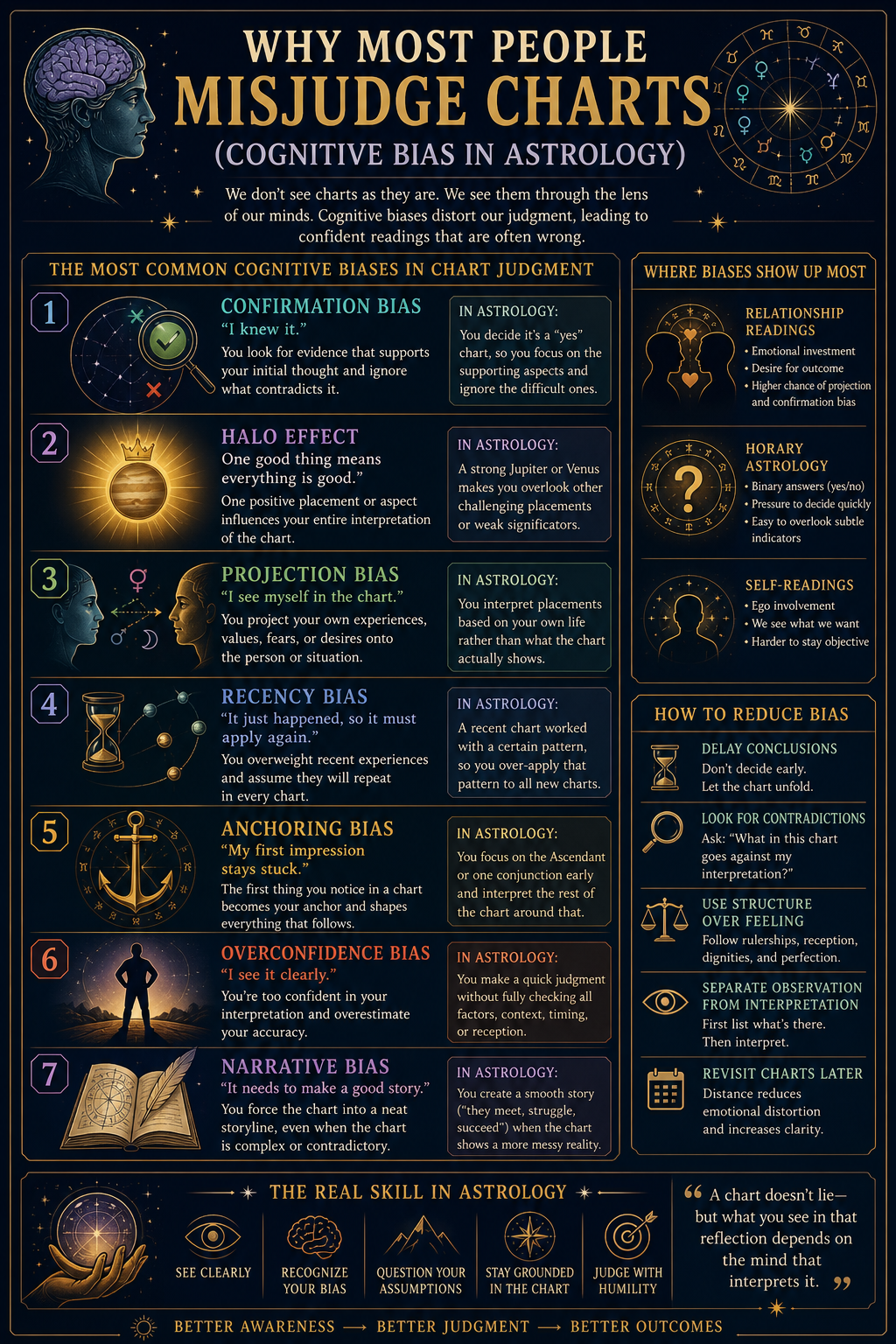
The Illusion of Objectivity Astrology feels objective. You’re looking at a chart, applying rules, reading symbols—it seems structured, almost mathematical. But in reality, chart judgment […]
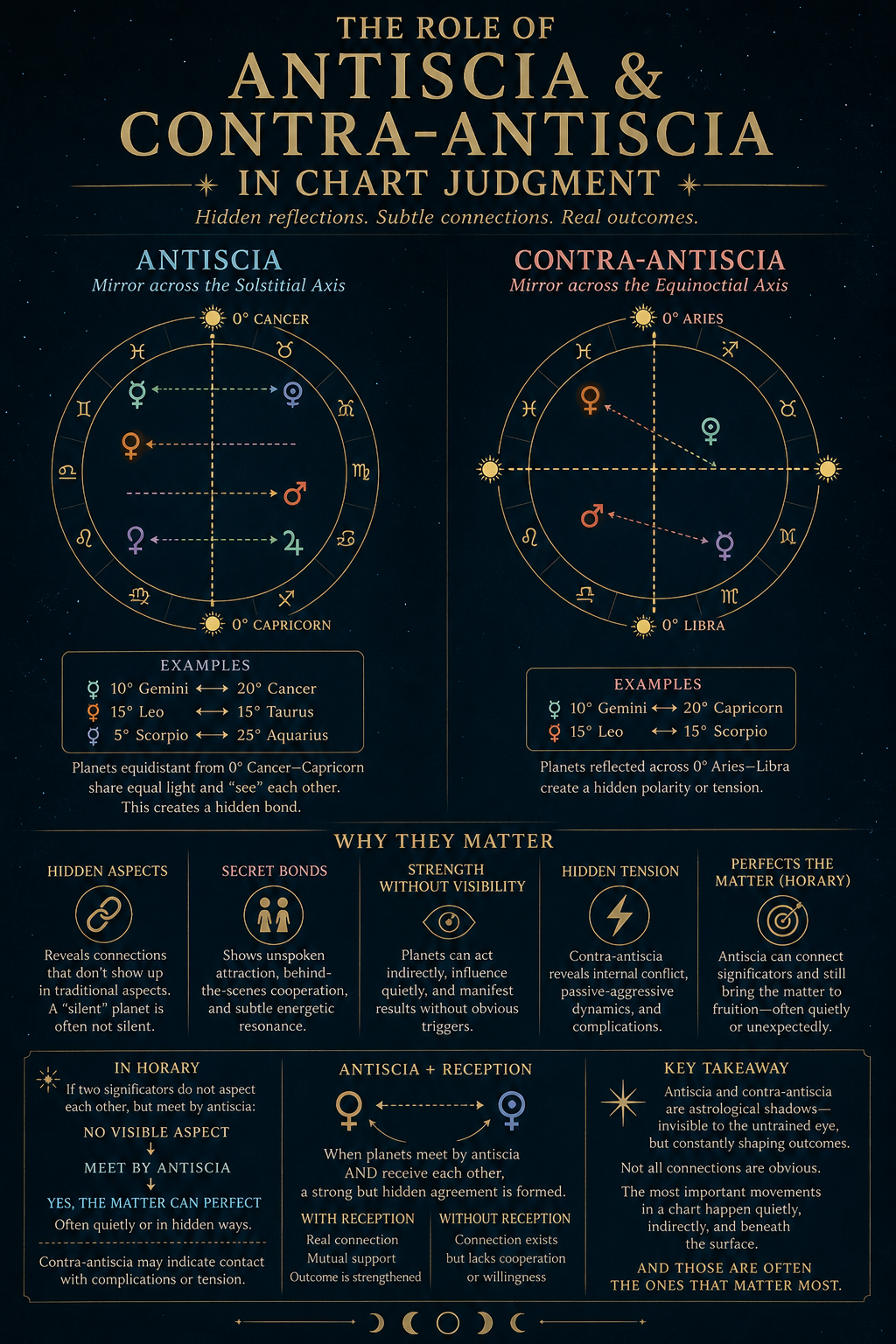
What Are Antiscia? In traditional astrology, antiscia are mirror points across the solstitial axis—0° Cancer to 0° Capricorn. Think of them as hidden reflections, where […]
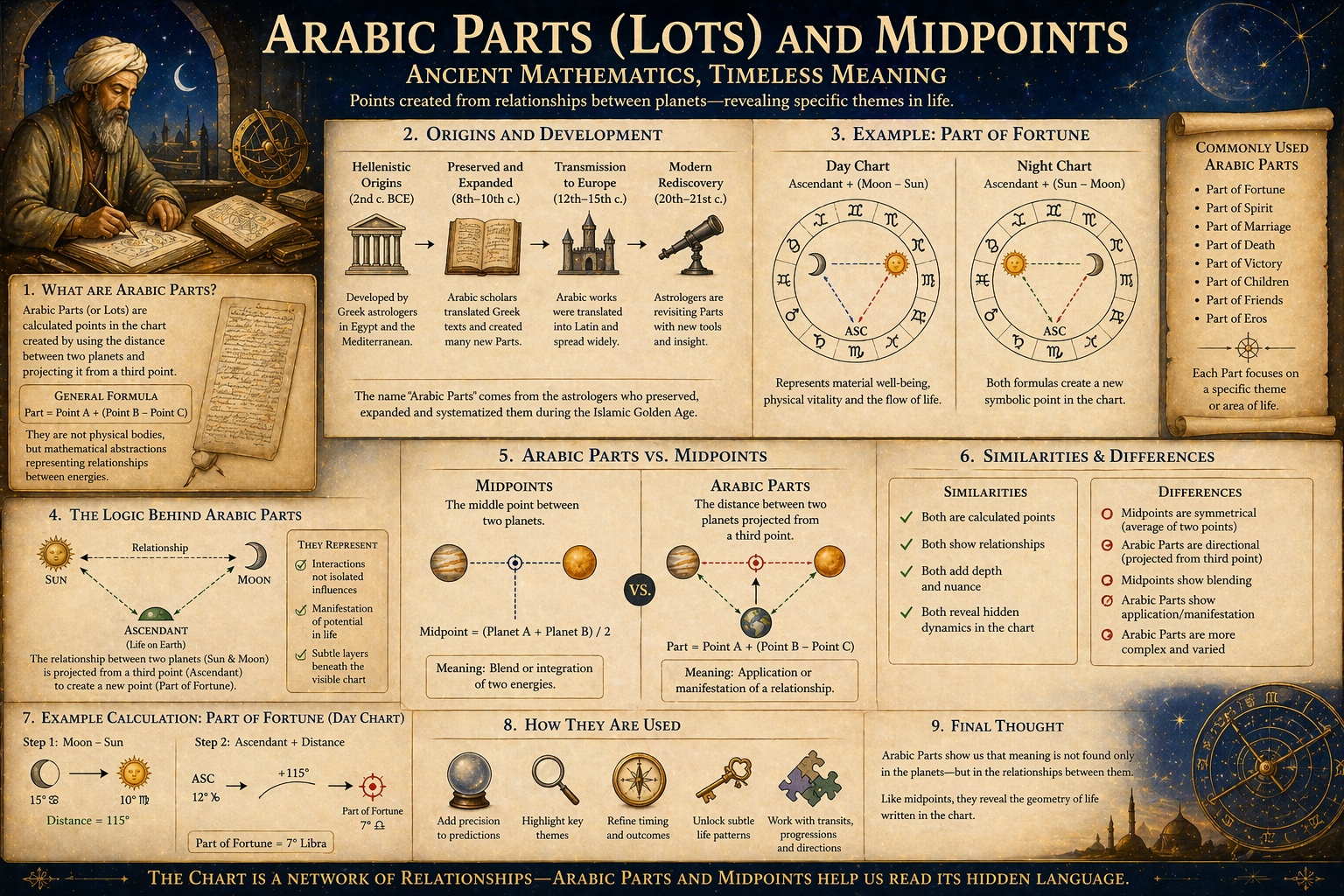
Among the more technical tools in astrology, Arabic Parts—also known as Lots—stand out as a fascinating bridge between ancient methods and modern techniques. They are: […]
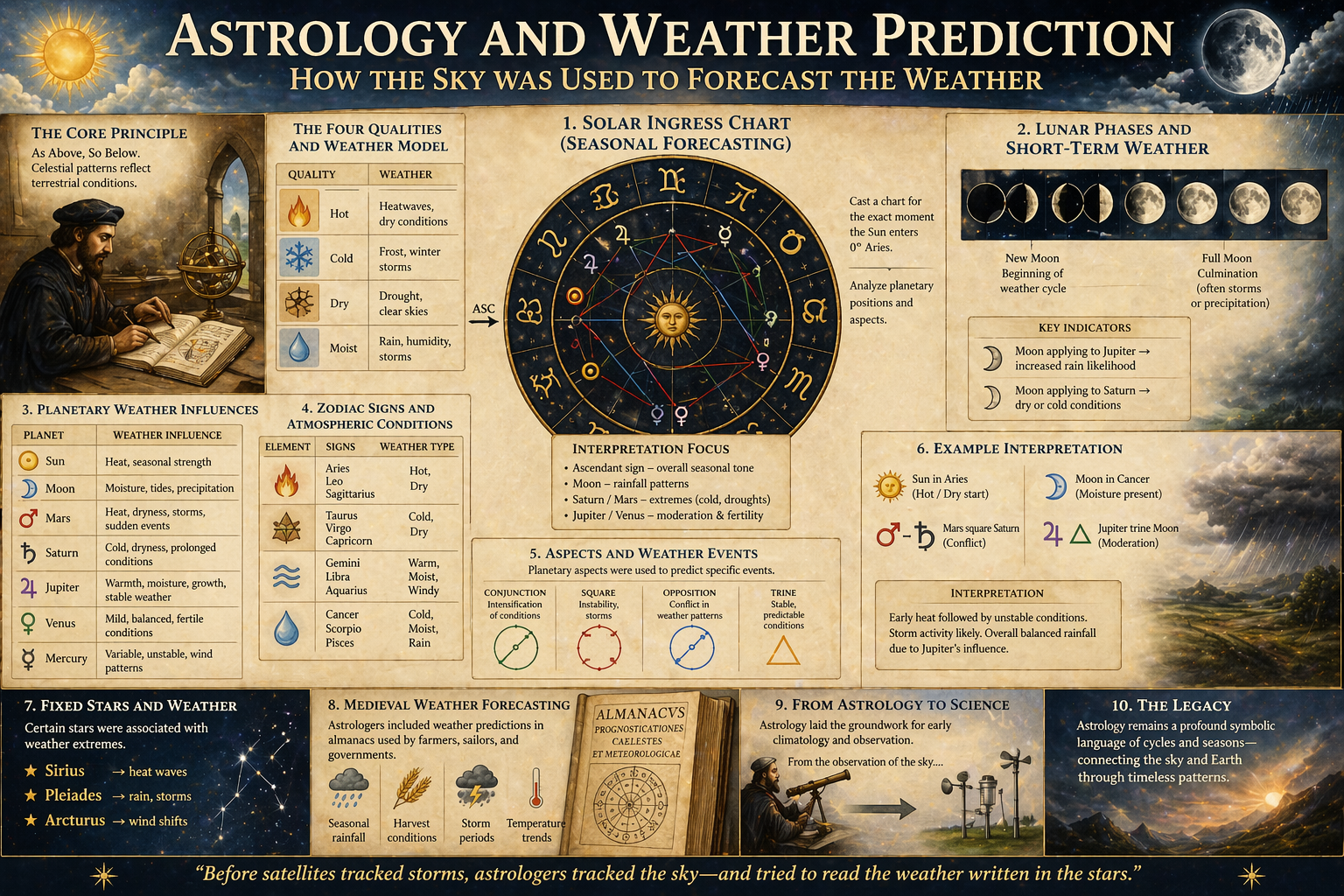
Long before modern meteorology, astrology played a central role in predicting weather patterns. In fact, one of astrology’s earliest and most practical applications was not […]