
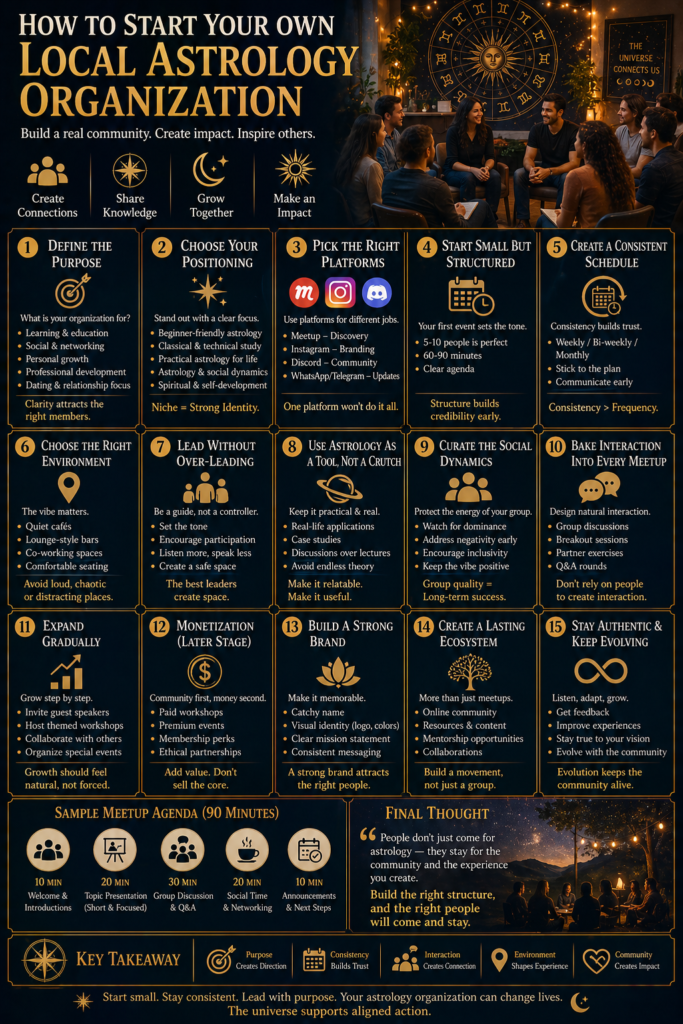
From Idea to Real-World Community
Most people experience astrology alone:
- Reading charts
- Watching videos
- Following content online
But real growth—and real influence—comes from:
Building a physical or local community
If done right, a local astrology organization can become:
- A social hub
- A learning environment
- A long-term brand asset
Here’s how to actually build one.
1. Define the Purpose (This Is Everything)
Before anything else, decide:
What is your organization for?
Possible Directions
- Beginner learning group
- Advanced technical study (horary, timing)
- Social + dating-oriented astrology
- Business / networking group
Insight
Clarity here determines:
Who shows up—and who stays
2. Choose Your Positioning
Most astrology groups fail because they are:
- Too vague
- Too generic
Strong Positioning Examples
- “Practical Astrology for Real-Life Decisions”
- “Classical Astrology Study Group”
- “Astrology & Social Dynamics Meetup”
Insight
Niche = stronger identity
3. Pick the Right Platform
Best Starting Options
- Meetup
- Discord
Strategy
- Meetup → discovery
- Instagram → branding
- Discord → retention
Insight
Use platforms for different functions—not everything at once
4. Start Small (But Structured)
Ideal First Event
- 5–10 people
- 60–90 minutes
- Clear agenda
Example Format
- Quick intro
- Short topic (e.g., Moon timing)
- Open discussion
- Light social time
Insight
Structure builds credibility early
5. Create a Consistent Schedule
Options
- Weekly
- Bi-weekly
- Monthly
Key Rule
Consistency > frequency
Insight
People don’t commit to randomness—they commit to:
Predictability
6. Build the Right Environment
Choose Locations Carefully
- Quiet cafés
- Lounge-style bars
- Co-working spaces
Avoid
- Loud venues
- Distracting environments
Insight
Environment shapes the quality of interaction
7. Lead Without Over-Leading (Your Style)
You don’t need to:
- Dominate conversation
- Over-teach
Better Approach
- Set the tone
- Let others engage
- Guide lightly
Insight
The best leaders create space—not control it
8. Use Astrology as a Tool, Not a Crutch
Avoid
- Overly abstract discussions
- Endless theory
Focus On
- Real-life applications
- Case studies
- Practical insights
Insight
People stay when astrology connects to real life
9. Curate the Social Dynamics
This is critical—and often overlooked.
Watch For
- Dominating personalities
- Negative energy
- Attention-seeking behavior
Your Role
- Subtly guide dynamics
- Maintain balance
Insight
Group quality determines long-term success
10. Create “Baked-In Interaction”
Just like GSM works well because:
- Interaction is natural
Do This By
- Group discussions
- Rotating partners
- Interactive exercises
Insight
Don’t rely on people to create interaction—design it
11. Expand Gradually
After Stability
Add:
- Guest speakers
- Workshops
- Themed nights
Example Topics
- Synastry deep dives
- Timing decisions
- Relationship dynamics
Insight
Growth should feel natural—not forced
12. Monetization (Optional, Later Stage)
Options
- Paid workshops
- Premium sessions
- Sponsorships
Your Philosophy Alignment
- Keep core free
- Monetize indirectly
Insight
Community first, money second
13. Build a Brand Around It
Key Elements
- Name
- Visual identity
- Consistent messaging
Example
- “Astrology & Strategy Society”
- “Practical Astrology Lab”
Insight
A strong brand attracts the right people automatically
14. The Long-Term Vision
If done right, your organization becomes:
- A network
- A reputation builder
- A platform for influence
Insight
This is not just a meetup—it’s an ecosystem
Final Thoughts
Starting a local astrology organization isn’t about astrology alone.
It’s about:
- Structure
- Social dynamics
- Consistency
Core Idea
People don’t just join for astrology—
they stay for the environment you create
Final Insight
Build the right structure, and the right people will come.
Build the right environment, and they will stay.