
There is an interesting pattern running through centuries of religious symbolism:
evil frequently does not create something completely new—it takes something that already exists and turns it around.
Sacred symbols become inverted.
Religious ceremonies become parodies.
Pleasure becomes addiction.
Freedom becomes enslavement.
Intelligence becomes manipulation.
Nature becomes something to exploit rather than participate in.
Even virtues can be distorted until they produce the opposite of their original purpose.
This raises an intriguing spiritual idea:
Could the Devil be understood symbolically as the great inverter?
Not necessarily as someone literally walking around turning crosses upside down, but as an archetype representing the principle of reversal, distortion and corruption.
Interestingly, the Hebrew word satan does not literally mean “the reverser.” It comes from a root associated with opposition and means something closer to adversary, opponent or accuser. The Greek diabolos, which gives us “devil,” carries meanings such as accuser or slanderer.
But opposition easily leads to inversion.
If something represents one direction, the adversary takes the opposite direction.
If something points toward God, turn it downward.
If something represents harmony, corrupt it into conflict.
If something connects people, transform it into something that divides them.
From that perspective, the symbolism of reversal begins to make remarkable sense.
Evil Often Works Through Corruption Rather Than Creation
There is an old theological intuition that evil has difficulty existing entirely on its own.
Instead, it corrupts something that was originally good.
Consider some obvious examples.
Food is necessary.
Gluttony distorts it.
Sexuality can create life and intimacy.
Compulsion or exploitation distorts it.
Confidence is healthy.
Narcissism distorts it.
Money allows exchange and security.
Greed distorts it.
Technology can connect people.
Addiction and manipulation can distort it.
Leadership creates organization.
Tyranny distorts it.
The original thing may be perfectly useful.
The destructive element comes from turning its purpose against itself.
That may be one of the deeper meanings of spiritual inversion.
The Devil does not necessarily need to invent another universe.
He simply whispers:
“Take what already exists—and reverse its purpose.”
The Inverted Pentagram
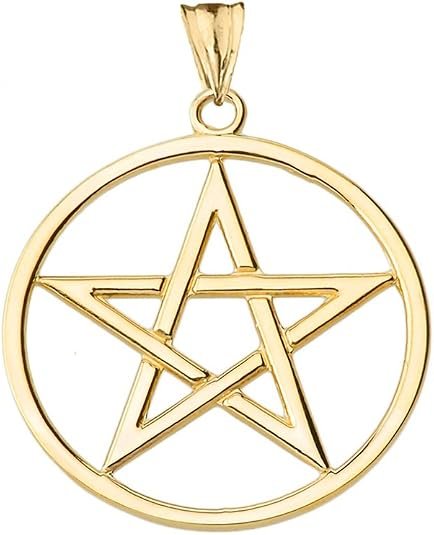
Perhaps the most recognizable example is the pentagram.
The five-pointed star is far older than modern Satanism and has carried many different meanings across cultures and periods.
In Western occultism, however, the direction of the pentagram eventually became symbolically important.
Nineteenth-century occultist Éliphas Lévi explicitly distinguished between the pentagram with one point upward and the pentagram with two points upward. For Lévi, the upward version represented spiritual order, while the inverted form represented the goat and infernal symbolism.
The goat-head pentagram developed further in later nineteenth-century occult imagery and eventually became strongly associated with modern Satanism. The Church of Satan adopted its version of the Sigil of Baphomet as its principal emblem in the twentieth century.
This is a nearly perfect example of symbolic inversion.
In one interpretation of the upright pentagram, the upper point represents spirit above the four material elements.
Turn the star upside down and symbolically:
matter is elevated above spirit.
Whether one accepts that occult interpretation or not, the symbolism is elegant.
Instead of consciousness governing appetite, appetite governs consciousness.
Instead of spirit organizing matter, matter overwhelms spirit.
The star itself has not changed.
Only its orientation has.
And yet the meaning becomes dramatically different.
The Upside-Down Cross—With an Important Correction
The inverted cross is another symbol commonly associated today with Satanism, horror movies and rejection of Christianity.
But historically this example is more complicated.
The upside-down cross is traditionally associated with Saint Peter.
Christian tradition holds that Peter was crucified upside down because he considered himself unworthy to die in exactly the same manner as Jesus.
For that reason, the inverted cross can actually represent Christian humility and martyrdom rather than Satanism.
Later anti-Christian imagery sometimes deliberately used the inverted cross as a visual rejection of Christianity, and modern Satanists may use it in that way. Even the Church of Satan acknowledges that Christians historically associate the inverted cross with Peter while noting that Satanists may also use it when it symbolizes rejection of Christianity.
So context matters.
An upside-down cross in a Catholic setting may symbolize Peter.
The same image deliberately placed inside an anti-Christian ritual can mean:
“Take Christianity and reverse it.”
The shape alone does not determine the spiritual intention.
The Swastika: A Powerful Example of Meaning Being Reversed
The swastika provides an even more dramatic example.
Today, much of the Western world immediately associates the swastika with:
Nazism,
racism,
genocide,
and the Holocaust.
But historically the symbol is thousands of years older than Nazism.
The Sanskrit word svastika is associated with well-being or good fortune. The symbol appeared for millennia in India and elsewhere and remains sacred within Hinduism, Buddhism and Jainism. The U.S. Holocaust Memorial Museum notes that versions of the symbol were used for at least 5,000 years before Hitler adopted it for the Nazi movement.
The Nazis appropriated an ancient auspicious symbol and transformed its meaning for millions of people into one associated with racial ideology and mass murder.
This was not literally “Satan turning the symbol around.”
Nor is the Nazi swastika simply a magical reversal of every traditional swastika; orientation varied historically.
But spiritually, the transformation illustrates the broader idea beautifully:
a symbol associated with well-being became associated with terror.
Its meaning was almost inverted.
Something ancient and sacred was taken into a radically different ideological system.
That may be a better example of corruption than simple geometric reversal.
The Third Great Example: Reversing the Sacred Ritual
There is another example that fits your idea even more directly:
the Black Mass.
In Christian folklore and later occult practice, the Black Mass was imagined as a deliberate inversion or parody of the Catholic Mass.
Sacred prayers might be altered.
Holy symbols could be reversed.
Christian ritual elements could be given anti-Christian meanings.
Reference works explicitly describe the Black Mass as a blasphemous caricature of the Christian Mass involving an inversion of its symbolism.
Some medieval stories about Satanic Black Masses came from inquisitorial accusations and coerced confessions and therefore should not be treated straightforwardly as reliable descriptions of historical underground Satanic organizations. Later versions, however, did appear in occult and Satanic contexts.
What matters symbolically is the structure.
The ritual does not invent an entirely different religion.
It takes:
the altar,
the prayer,
the cross,
the liturgy,
the sacred object
and reverses their intended meaning.
That may be the clearest historical manifestation of the Devil-as-inverter archetype.
The Devil as Counterfeit
Perhaps counterfeit is even more precise than reversal.
A counterfeit resembles the real thing closely enough to deceive you.
Consider how temptation often works.
It rarely presents itself as:
“Here is something obviously terrible that will destroy your life.”
Instead it says:
“This will make you happy.”
“This will make you free.”
“You deserve this.”
“Everybody does it.”
“This will give you power.”
“This will remove your pain.”
The temptation often contains a small piece of truth.
That is what makes it persuasive.
Addiction provides pleasure.
Greed can produce wealth.
Revenge can feel satisfying.
Manipulation can create temporary advantage.
The counterfeit offers something genuinely attractive—but reverses the final outcome.
What promises freedom creates dependence.
What promises confidence creates insecurity.
What promises pleasure creates suffering.
What promises power creates fear.
The object looks like the original virtue.
Its destination is reversed.
Turning Freedom Into Slavery
This may be one of the strongest modern examples.
Imagine someone saying:
“Nobody controls me. I can do whatever I want.”
That sounds like freedom.
But suppose “doing whatever I want” gradually means being unable to resist:
alcohol,
drugs,
pornography,
gambling,
anger,
shopping,
social media,
or constant stimulation.
The person began by rejecting restraint in the name of freedom.
Eventually they cannot stop.
Freedom has inverted itself into compulsion.
Spiritually, that is almost perfectly diabolical symbolism.
The chain appears initially as liberation.
By the time the person realizes it is a chain, it has already tightened.
Turning Connection Into Isolation
Social media offers another modern example.
The original promise was extraordinary:
connect everyone.
Friends across continents could communicate instantly.
Families could stay connected.
Knowledge could spread.
Communities could form.
Yet the same technology can also produce:
comparison,
outrage,
loneliness,
performative identity,
attention addiction,
and superficial relationships.
A technology of connection can paradoxically create people sitting alone staring at representations of other people’s lives.
Again:
the original function becomes inverted.
Connection becomes isolation.
Expression becomes noise.
Information becomes confusion.
Choice becomes addiction.
This is the pattern.
Turning Knowledge Into Confusion
Knowledge is traditionally associated with illumination.
More information should theoretically produce greater understanding.
Yet the internet created another strange inversion.
Human beings now have access to more information than any civilization in history.
And simultaneously, misinformation has become extraordinarily easy to create and distribute.
AI makes this even more interesting.
AI can clarify.
Educate.
Translate.
Research.
Explain.
But it can also manufacture enormous amounts of plausible-looking nonsense.
Knowledge technology can become confusion technology.
Again, the tool itself is not evil.
The reversal occurs through how the tool is directed.
That distinction matters.
Going Against Nature
Your second idea—reversing nature—also has a long spiritual history.
Traditional religions frequently treated moral order and natural order as connected.
The universe possesses rhythms:
day and night,
activity and rest,
birth and death,
growth and decay,
giving and receiving.
Human beings also possess biological limits.
We need:
sleep,
food,
movement,
community,
solitude,
sunlight,
rest.
Modern society can sometimes encourage us to live almost completely against those rhythms.
Stay awake all night under artificial lighting.
Sit motionless all day.
Eat food designed primarily around reward rather than nourishment.
Spend hours indoors staring at artificial environments.
Receive stimulation continuously.
Never experience silence.
Work without meaningful rest.
From a spiritual perspective, this can be understood as another kind of inversion:
instead of human civilization serving human nature, human beings begin serving the systems they created.
The machine that was supposed to serve the human becomes the master.
But “Against Nature” Needs Caution
Historically, the phrase “against nature” has also been used to condemn people whose lives, identities or relationships did not fit a society’s prevailing norms.
That makes the phrase dangerous when used carelessly.
Something being unusual does not automatically make it unnatural.
Something being modern does not automatically make it evil.
Medical technology can alter natural processes and save lives.
Glasses interfere with “natural” vision and improve it.
A pacemaker modifies the body’s natural rhythm and can preserve life.
So the spiritual test should not simply be:
“Is this natural?”
A better question is:
“Does this strengthen flourishing, consciousness and life—or progressively destroy them?”
The Devil-as-inverter idea becomes stronger when it is about purpose and consequence, not merely breaking tradition.
The Inversion of Virtue
Perhaps an even deeper level involves turning virtues into their opposites while retaining their names.
For example:
Cruelty can disguise itself as honesty.
Cowardice can disguise itself as tolerance.
Control can disguise itself as love.
Greed can disguise itself as ambition.
Narcissism can disguise itself as self-love.
Passivity can disguise itself as spirituality.
Aggression can disguise itself as strength.
Avoidance can disguise itself as detachment.
This may be the most dangerous inversion because the label still sounds virtuous.
A person tells themselves:
“I’m just being honest.”
But they are enjoying hurting someone.
Or:
“I’ve detached.”
But really they are afraid to care.
The word remains sacred.
The underlying energy has reversed.
Spirituality Itself Can Be Reversed
Even spirituality is not immune.
Meditation is supposed to reduce ego.
Someone can instead become proud that they meditate more than everyone else.
Religion teaches humility.
Someone uses religion to feel morally superior.
Astrology encourages self-understanding.
Someone uses astrology to avoid responsibility.
Prayer teaches surrender.
Someone uses prayer exclusively to demand outcomes.
Spiritual knowledge becomes another status competition.
The ego effectively says:
“Fine. If you insist on becoming spiritual, I will become the most spiritual person in the room.”
The path toward ego-transcendence becomes fuel for ego.
That may be one of the cleverest inversions of all.
Turning Love Into Possession
Love provides another powerful example.
Love says:
“I want what is good for you.”
Possessiveness says:
“I need you to belong to me.”
Both may initially feel similar because both involve intense attachment.
But their direction is different.
Love gives.
Possession grips.
Love allows freedom.
Possession fears freedom.
Something beautiful can gradually reverse itself.
That is why spiritual traditions continually warn about attachment.
The danger is not necessarily loving too much.
It is allowing love to become fear disguised as love.
Turning Masculine and Feminine Energies Against Each Other
If we use symbolic yin-and-yang language, another modern inversion occurs when complementary forces become enemies.
Masculine and feminine.
Reason and intuition.
Strength and compassion.
Independence and community.
Instead of balancing each other, they become competing camps.
One side says:
only strength matters.
Another says:
strength itself is dangerous.
One says:
emotion is weakness.
Another says:
reason is oppression.
The original complementary polarity becomes warfare.
Spiritually, that is another inversion:
difference becomes division.
Yang without yin becomes harsh.
Yin without yang becomes directionless.
The destructive force does not need to eliminate either principle.
It merely persuades them to hate one another.
What About Living Life “In Reverse”?
Your third idea is particularly interesting, but it requires a different interpretation.
Suppose someone has a difficult childhood.
They cannot enjoy youth properly.
Perhaps they have:
responsibilities too early,
family instability,
poverty,
illness,
strict expectations,
or emotional hardship.
Later in adulthood they finally gain:
freedom,
money,
confidence,
time,
playfulness,
travel,
relationships,
and independence.
They may then seem to live their life backward.
At forty they experience things other people experienced at twenty.
At fifty they may become more playful than they were at fifteen.
Is that a diabolical inversion?
Not necessarily.
In fact, it can be the opposite:
a healing reversal.
Not Every Reversal Is Evil
This distinction is essential.
A prisoner becoming free is a reversal.
An addict becoming sober is a reversal.
An angry person becoming compassionate is a reversal.
A traumatized adult rediscovering childhood joy is a reversal.
Winter turning into spring is a reversal.
Night becoming day is a reversal.
Transformation often requires reversal.
Therefore the spiritual principle cannot simply be:
reversal = Devil.
The more precise principle is:
evil reverses the proper relationship between things.
The servant becomes master.
The means becomes the end.
Pleasure becomes compulsion.
Power becomes domination.
Spirituality becomes ego.
Love becomes possession.
Knowledge becomes deception.
Freedom becomes bondage.
That is different from someone repairing an earlier imbalance.
Reclaiming a Lost Youth May Actually Reverse the Reversal
Consider the person who had to become an adult too early.
They were serious at twelve.
Responsible at sixteen.
Working at eighteen.
Perhaps they never:
played,
travelled,
dated,
explored,
or experienced freedom.
At forty, they finally begin doing those things.
From the outside, someone might say:
“You’re living backward.”
But spiritually, perhaps something else is happening.
Their life was originally forced out of sequence.
Now consciousness is attempting to integrate something that was missed.
They are not necessarily regressing.
They may be recovering an unlived part of themselves.
The first inversion damaged the natural developmental process.
The later “reverse” may actually restore balance.
Sometimes healing looks strange because healing must travel backward to retrieve something left behind.
The Devil as the Enemy of Integration
This suggests an even deeper interpretation.
Perhaps evil is not fundamentally about upside-down objects.
It is about fragmentation.
Separate the person from themselves.
Separate sexuality from love.
Separate intelligence from wisdom.
Separate power from responsibility.
Separate freedom from discipline.
Separate spirituality from compassion.
Separate humanity from nature.
Separate one group of people from another.
Once the pieces are separated, they become easier to distort.
Spiritual growth tends to move in the opposite direction:
integration.
Body and spirit.
Reason and intuition.
Strength and compassion.
Individuality and community.
Freedom and responsibility.
Masculine and feminine.
Past and present.
The sacred and everyday life.
Perhaps the deepest struggle is therefore not simply:
good versus evil.
It is:
integration versus inversion.
The Devil Does Not Necessarily Offer the Opposite
Here is the clever part.
If temptation always looked obviously evil, it would not be very effective.
Imagine the Devil appearing and saying:
“Would you like to destroy your health, finances, relationships and peace of mind?”
Almost everyone would answer no.
Instead the temptation says:
“This will feel good.”
“This will make you important.”
“You deserve revenge.”
“You need more.”
“You can stop whenever you want.”
“Everyone else is wrong.”
“You are special.”
The inversion happens gradually.
Something starts facing one direction.
One degree changes.
Then another.
Eventually it points completely backward.
The Compass Metaphor
Imagine the soul has a compass.
The spiritual path attempts to orient it toward:
truth,
compassion,
courage,
wisdom,
love,
discipline,
and consciousness.
The adversarial principle does not necessarily smash the compass.
That would be obvious.
Instead it moves the needle slightly.
A small lie.
A small rationalization.
A little resentment.
A little addiction.
A little arrogance.
Then another.
Eventually south looks like north.
That may be why inversion is such a powerful symbol for evil.
The person can be travelling in exactly the wrong direction while sincerely believing they are progressing.
Discernment Means Asking What Something Produces
How can we recognize inversion?
Not merely by appearances.
An upright pentagram does not make someone good.
An inverted symbol does not automatically make someone evil.
Religious clothing does not prove virtue.
Spiritual vocabulary does not prove spiritual maturity.
The better test is:
What does this produce?
Does it produce:
greater consciousness or greater unconsciousness?
freedom or dependence?
compassion or cruelty?
clarity or confusion?
responsibility or blame?
integration or fragmentation?
love or possession?
truth or manipulation?
That may be a more reliable spiritual compass than symbolism alone.
Perhaps Hell Itself Is Reversal
Many religious descriptions of hell contain an interesting inversion.
What should provide pleasure becomes suffering.
What looked desirable becomes imprisonment.
The individual who wanted complete separation ultimately receives isolation.
The person who worshipped ego becomes trapped within ego.
You could therefore interpret hell symbolically as the logical endpoint of inversion.
Everything has turned so completely inward upon itself that nothing can flow.
Love becomes impossible.
Connection becomes impossible.
Growth becomes impossible.
Only the isolated self remains.
Whether one understands hell literally or psychologically, the symbolism is powerful.
And Perhaps Salvation Is Turning Around Again
Interestingly, spiritual conversion is often described through the language of turning.
Repentance involves changing direction.
Buddhism speaks of abandoning unwholesome states and cultivating wholesome ones.
Yoga seeks realignment.
Daoism seeks returning to harmony with the Dao.
Christian conversion means turning away from sin and toward God.
If the Devil’s symbolic movement is inversion, spiritual awakening becomes reorientation.
The compass turns back.
The person recognizes:
I thought this was freedom.
It was slavery.
I thought this was confidence.
It was insecurity.
I thought this was detachment.
It was avoidance.
I thought this was love.
It was possession.
That moment of recognition is enormously important.
The spell of inversion breaks.
The Great Spiritual Question: What Has Been Turned Around?
Perhaps this becomes a useful meditation.
Look at your own life and ask:
What is serving what?
Does money serve your life—or does your life serve money?
Does technology serve you—or do you serve technology?
Does sexuality serve intimacy—or does intimacy exist only to provide sexuality?
Does knowledge produce wisdom—or merely ego?
Does spirituality reduce your self-importance—or increase it?
Does freedom make you more capable—or less capable of self-control?
Does work support your life—or consume it?
Does your personality serve your soul—or does your soul spend all its energy protecting your personality?
These questions reveal inversion much better than hunting for sinister symbols.
The Devil as an Archetype of Inversion
So does the Devil always reverse things?
Historically and theologically, that is too absolute.
Neither the Hebrew word Satan nor the Greek word diabolos literally means “inverter.” The traditional meanings revolve around adversary, accuser and opponent.
But as a spiritual archetype, your intuition has a surprisingly strong foundation.
Satanic and anti-Christian symbolism has repeatedly used inversion.
The inverted pentagram became associated with infernal symbolism in nineteenth-century Western occultism.
Some Satanic traditions deliberately appropriated and reversed Christian symbols and rituals.
The Black Mass became almost the textbook example of sacred ritual deliberately turned against its original meaning.
And beyond literal Satanism, inversion gives us a powerful philosophical model of evil:
Take something good.
Detach it from its proper purpose.
Exaggerate it.
Corrupt it.
Then convince people that the corrupted version is liberation.
That is much subtler than simply destroying goodness.
The Devil’s Greatest Trick May Be Making South Look Like North
Perhaps the symbolism ultimately comes down to orientation.
An upside-down star remains a star.
A reversed ritual uses many of the same words.
A counterfeit resembles the genuine object.
An addiction initially feels like pleasure.
Possession initially resembles love.
Arrogance can resemble confidence.
Cowardice can resemble peace.
Isolation can resemble independence.
Spiritual ego can resemble enlightenment.
The danger is precisely that the reversed version retains enough of the original to appear convincing.
So perhaps the spiritual task is not obsessively searching the world for the Devil.
It is continually checking the compass.
Ask:
Which direction is this actually taking me?
Toward greater awareness?
Toward compassion?
Toward freedom?
Toward integration?
Toward truth?
Or does something that initially looked beautiful gradually create the exact opposite?
Because if the Devil is understood symbolically as the Adversary, then perhaps his most effective method is not always open opposition.
Sometimes it is simply taking the road toward the sacred—
and quietly turning the sign around.